My digitization observations this week revolve around cinema and DVD transfers.
I was watching
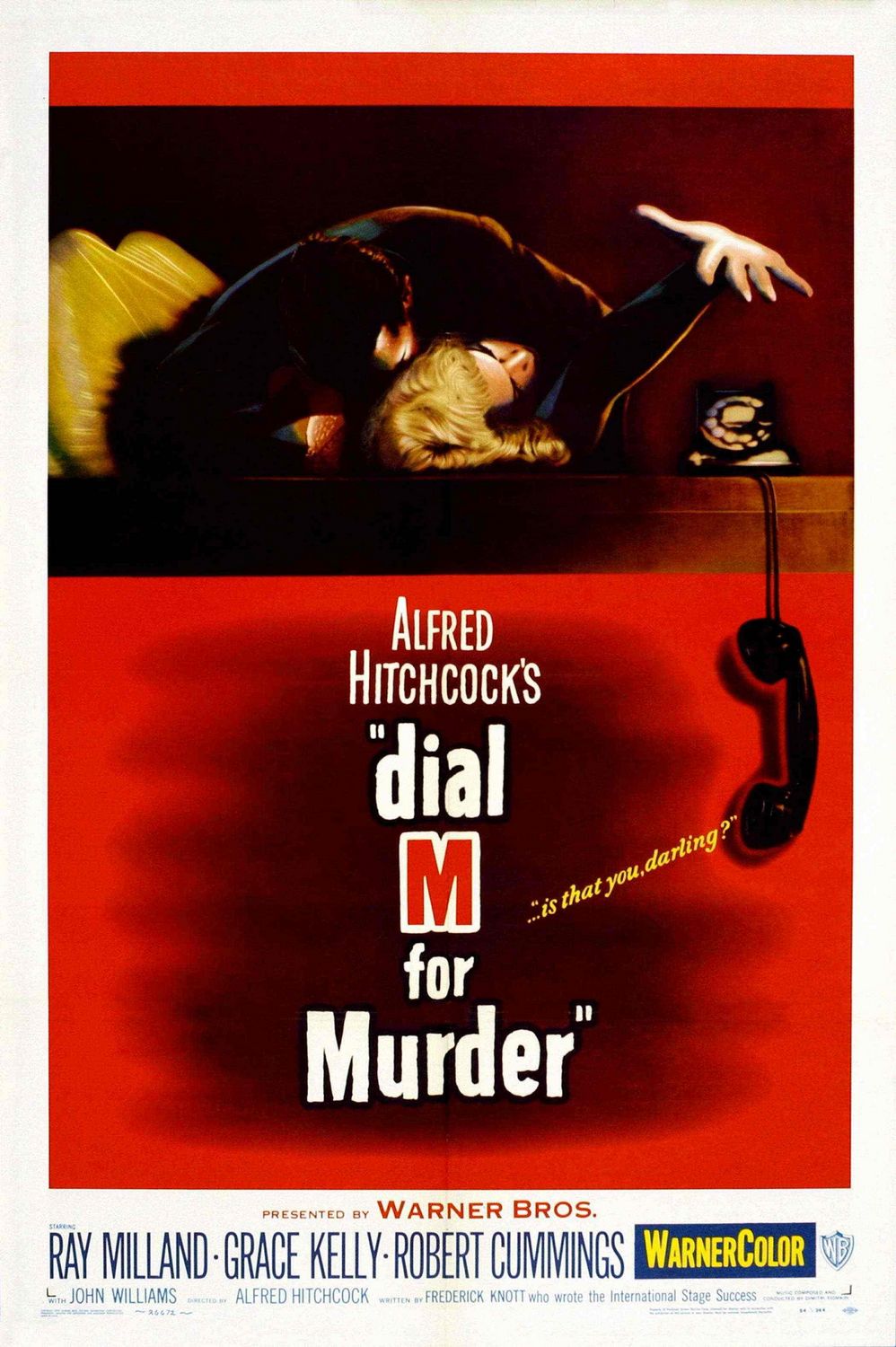
Alfred Hitchcock's Dial M for Murder a couple of weeks ago and I was struck by
a couple of things: Firstly, I watched a 2D version of what was originally a 3D
film. I started to wonder which of the reels was used for the 2D version on the
DVD - the left or right? What were the considerations for selecting that view?
Was one of the original master reels of higher quality? Would anyone know or notice the difference? I
realized that 50% of the visual content of the original had been removed and the end product did not appear to suffer. That is a significant amount of compression, even
before the digitization had begun.
I didn’t miss the
3D experience of the film, as there was an sense of three dimensions within
the blocking and framing of the shots. Save for one iconic moment when the
heroine reaches out for help (essentially to the audience), the movie doesn’t
rely on too many of the gimmicky 3D moments that draw attention to the tropes
of 3D (I’m thinking of some of the cheesier scenes in Jaws 3-D or Fridaythe 13th Part 3).
 | |
| https://commons.wikimedia.org/wiki/File:Dial_M_For_Murder.jpg |
In this I was reminded
of debates over mono and stereo versions of Beatles albums. One could assume that
the stereo versions are superior, as they offer the listener an enhanced
experience – a wider soundscape to immerse oneself in. However, the bulk of
mixing time was spent on the mono mixes. Stereo mixes were an afterthought, a
way to cash in on a relatively new technological advancement. Recent mono re-releases of Beatles albums were then seen to be truer to the original vision
of the band, as opposed to the seemingly updated mode of stereo representation.
 | |
| https://www.flickr.com/photos/vancouver-archives/8229393567 |
The other thing
that jumped out at me while watching Dial M for Murder was that the DVD transfer
included intermission music and an accompanying splash screen from the original
theatrical release. While it took me out of the drama of the movie momentarily,
it did introduce a strange sensation of time travel - I was suddenly
transported to a movie theatre in 1954. I ceased to engage with the content
and the intermission became an opportunity to reflect on how movie viewing has
changed in the last 60 years. It was like a little micro-featurette in the
middle of the movie, one that was self explanatory and which gave space to
imagine a different time to my own.D
A recent viewing
of a remastered version of Lawrence of Arabia included even more added
material: in addition to a musical intermission, the DVD included an overture
of music before the first reel of filmed content began. It was a very strange
feeling watching an empty screen (there may have been an accompanying image of
curtains) and listening to the orchestra play. As with Dial M for Murder,
neither the music or the visuals were particularly engaging by themselves, but
they allowed that same moment of reflection.
I remember
watching VHS transfers of vintage movies and experiencing the same thing: an
intermission screen and accompanying music. I put that down at the time to the
tape being a cheap transfer, where there was neither the budget or inclination
to polish up the movie for a home-viewing audience. With the Dial M for Murder
and Lawrence of Arabia DVD transfers, the inclusion felt intentional, like
something in addition to the movie itself was being preserved. As a teenager I
watched a VHS copy of Monty Python's The Meaning of Life , where Eric Idle
encourages viewers to leave the theatre during the closing credits. This was
jarring to me, watching at a friend's house on a VCR: I felt like I was having
a diminished version of the experience than that of the original audience. While I could see the humour in it, the joke just didn't land in the
same way.
I started to
wonder if ever there have ever been different versions of comedies which exploit
both cinema and home viewing scenarios, offering different cuts. I also began to question what the
current movie going customs and conventions which will need to be captured and
embedded to be revealed to future audiences? An simulation of the Cineplex Fast
Play app? Biochemical simulations of rising blood sugar levels, due
to the ingestion of high-fructose corn syrup-based drinks? VR boots simulating a
sticky floor underneath the viewer’s feet?
All of this
points to a big question in digitization – what needs to be preserved: the artists’
original vision? The original audience’s experience? The studio/publisher's input? All of it? How do we measure what can
be compressed or removed? How do we include or uncover additional elements
without detracting from a future audience’s engagement with a text?
Perhaps the key
is in providing and layering choices for the reader/audience. The Lawrence of
Arabia DVD had a menu which gave the option to include or omit the prelude and
intermission (as a home viewer, I also had the option to skip ahead). But then another
question – would a version of Lawrence of Arabia which did not allow me to skip
the prelude and only allowed me to get a snack or a washroom break during the
intermission provide me as a viewer with a more thorough engagement with the text? Where are the divisions or demarcations between experience and text?

Glad to see some Hitchcock!
ReplyDeleteAs someone who has always enjoyed watching movies at home, rather than in a movie theatre, I shuddered at the thought of a "simulation of the Cineplex Fast Play app" - they should banish that entirely, if you ask me. I agree though - layering choices is something of a key.